ADDITIVE MANUFACTURING · SLA
Stereolithography for fine-detail resin parts
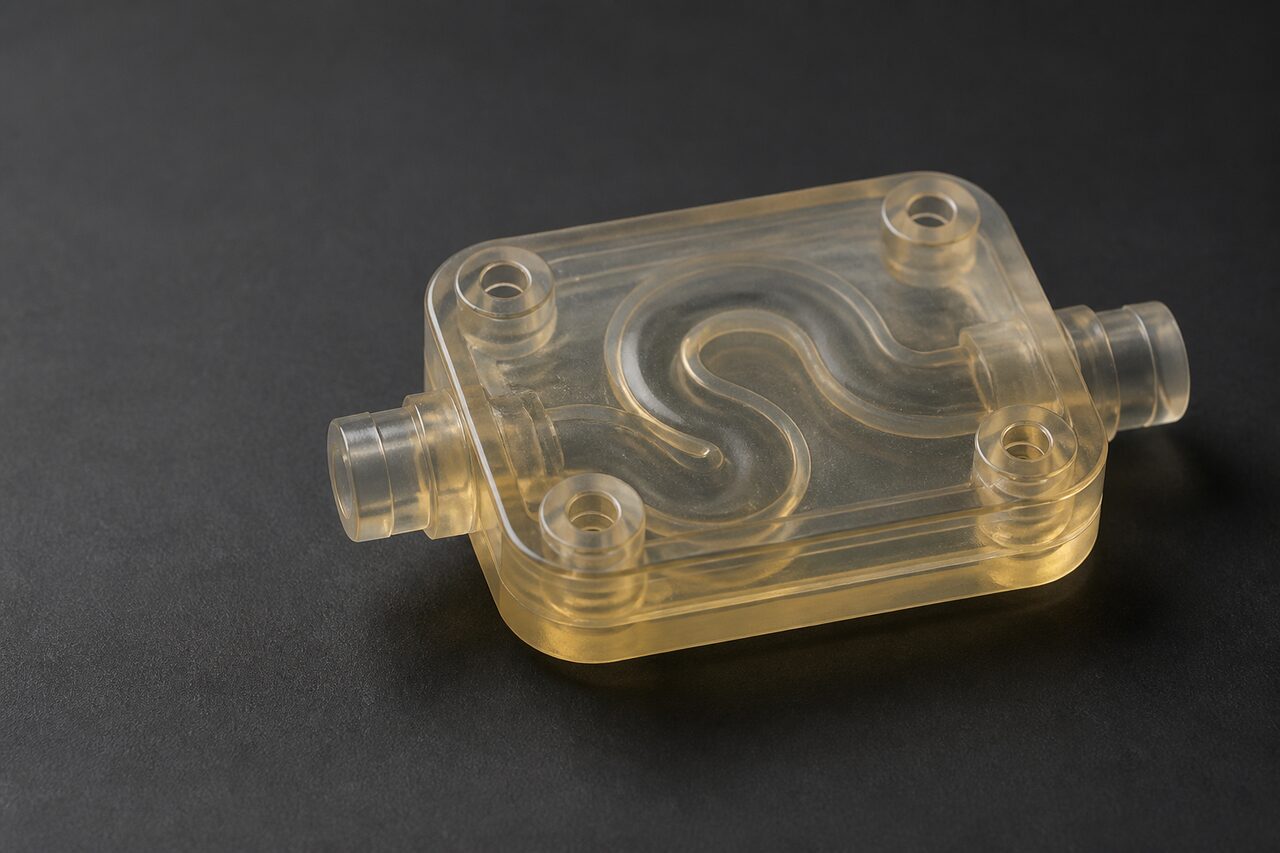
We produce fine-detail resin parts with Stereolithography, from visual and form-fit prototypes to master patterns and selected small-series requirements. A laser cures liquid photopolymer resin layer by layer, creating smooth surfaces and precise features. Tell us what the part needs to demonstrate, and we will define the resin, support and finishing approach with you.
Not sure whether SLA is the right process? Tell us what you need to evaluate—appearance, fit, detail, transparency or a master pattern—and we will work through the options with you.
CAPABILITY OVERVIEW
SLA capability at a glance
- Material system
- Application-selected photopolymer resin
- Production scope
- Prototypes, master patterns and selected small-series requirements
- Build approach
- Laser-cured liquid resin with engineered support structures
- Decision focus
- Fine features, visible surfaces, support contact and master-pattern finish
We take an SLA project from definition through production, finishing, verification and delivery. See how AtomAdd works
WHERE SLA FITS
Fine detail, with support and finish planned together.
SLA is well suited to parts where small features, smooth surfaces, visual inspection or master-pattern quality matter. Build orientation and supports influence contact marks and finishing, so they are planned around the surfaces and interfaces that matter most.
MATERIAL & FINISH
The resin system follows the application.
SLA photopolymers are selected around the part’s purpose, including appearance, fit, handling, temperature exposure and any required transparency. We confirm the material route against the specific requirement rather than treating one resin as suitable for every part.
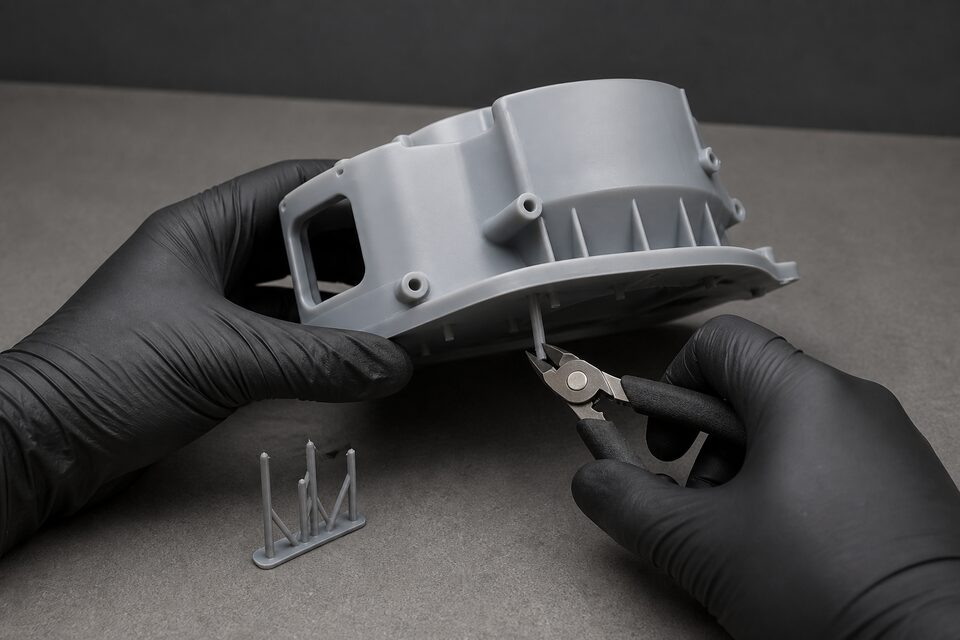
After printing, SLA parts require cleaning; the selected resin may also require post-curing. Support removal, contact-mark finishing, sanding, coating, painting and other finish requirements are reviewed against the geometry and intended surface.
If the resin or finish is not yet decided, begin with what the part needs to demonstrate, withstand or look like.
START WITH WHAT YOU KNOW
What helps us evaluate an SLA part.
Start with what the part must demonstrate—appearance, fit, detail or its role as a master pattern. The information available gives us the basis for evaluating the SLA route.
- CAD model, drawing or physical sample
- Purpose: visual, form-fit, functional or master pattern
- Quantity or expected repeat-production range
- Critical features, mating surfaces and clearances
- Surface appearance, colour or transparency expectations
- Environment, temperature, inspection and delivery requirements
The resin or finish can remain “Not yet decided.” Share what is available, and we will work through the production options with you.
START WITH THE REQUIREMENT
Start with what the prototype or part must prove.
Tell us what the part must prove when it is seen, fitted or used as a master pattern. We will shape the resin and finishing approach around that purpose and carry it through to finished parts.