CARBON & GRAPHITE COMPONENTS
Selected for the application. Finished for the interface.
We produce carbon and graphite components for sealing, bearing and rotating-equipment applications, bringing material selection, machining, finishing and agreed inspection together around the operating conditions and geometry.
Have a drawing, sample or existing part? Share what is available. If the material grade is not yet defined, begin with the component function and operating conditions.
CAPABILITY OVERVIEW
Carbon and graphite components at a glance
- Product families
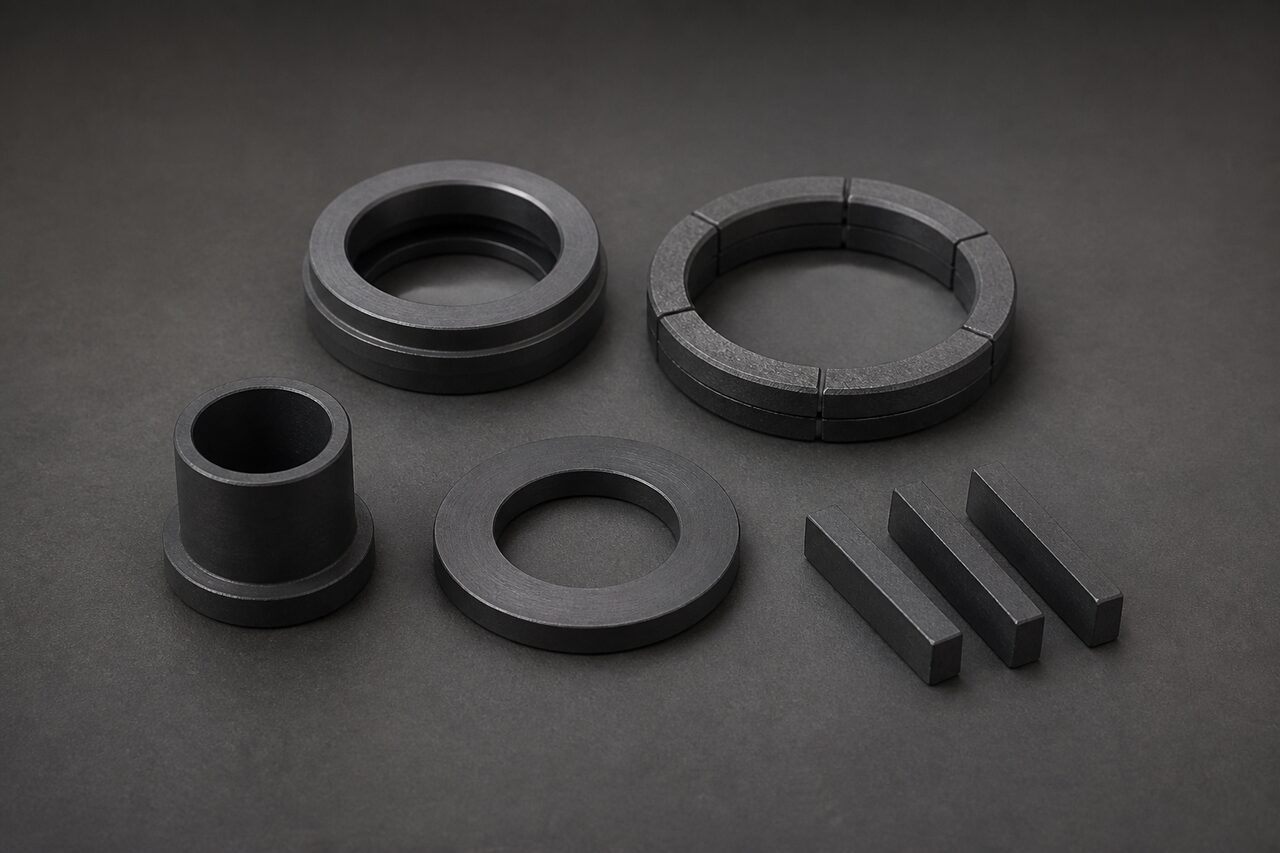
- Seal rings, bearings, bushes and vanes
- Application context
- Pumps, compressors, seals and rotating equipment
- Delivery form
- Machined and finished components
- Review basis
- Duty, geometry, mating interface and operating conditions
We take a carbon or graphite component requirement from definition through material selection, production, finishing, agreed inspection and delivery. See how AtomAdd works
PRODUCT FAMILIES
Component form follows the duty.
Different carbon and graphite component forms address different sealing, support and motion requirements. The material route is reviewed with the geometry and operating environment—not selected from a universal catalogue.
-
SEAL & SEGMENTED RINGS
Machined rings for sealing interfaces, including complete and segmented geometries defined around the equipment and mating face.
-
BEARINGS & BUSHES
Radial bushes and thrust-bearing forms reviewed around load, motion, lubrication conditions and the shaft or counterface.
-
ROTORS & VANES
Precision-machined components for pumps, compressors and related rotating equipment, shaped to the required machine geometry.
-
CUSTOM COMPONENTS & BLANKS
Finished custom geometries, or blanks and blocks where the downstream requirement calls for them.
MATERIAL & APPLICATION REVIEW
The grade is part of the engineering decision.
Carbon and graphite components are selected as a system: material grade, treatment, geometry, surface condition and mating interface must suit the application together.
Operating medium, temperature, load, motion, counterface and available lubrication are reviewed before the production route is confirmed. No single grade is appropriate for every duty.
A drawing or sample can establish the geometry; the available operating details help us review the material route.
START WITH WHAT YOU KNOW
Information that helps us review the component
A complete material specification is not required. The details below help us understand the application:
- 2D drawing, 3D model or physical sample
- Component function and equipment
- Operating medium and environment
- Available temperature, load and motion information
- Shaft, counterface or mating material
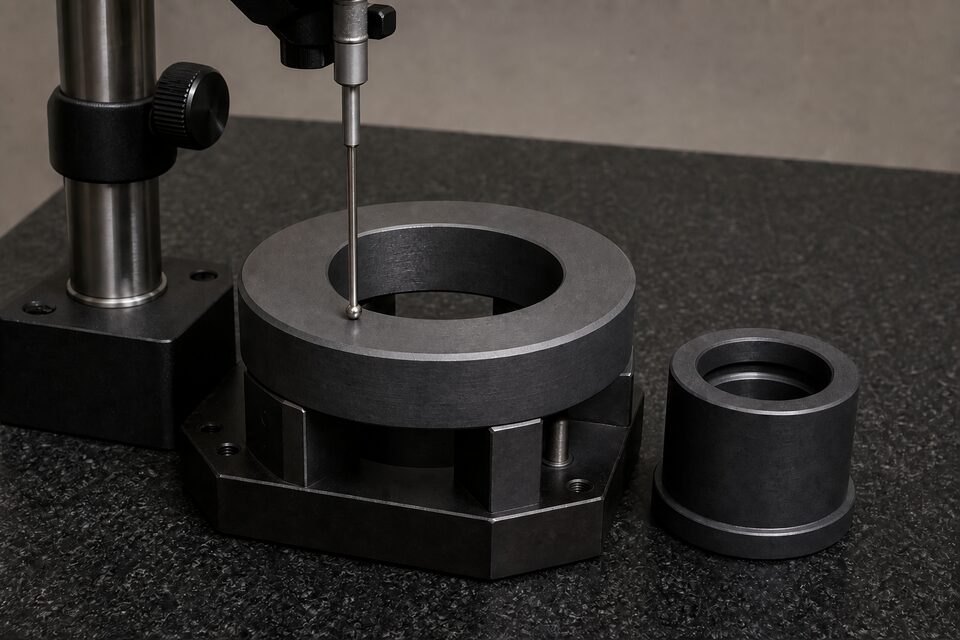
- Dimensions, fits and surface-condition requirements
- Quantity and expected repeat requirement
- Delivery and documentation requirements
If the grade or treatment is not known, share the component duty and the conditions you do know. We will work through the requirement with you.
START A CARBON OR GRAPHITE REQUIREMENT
Start with the component—or the operating duty.
Share the drawing, sample or available application details. We will review the product form, material route, machining and agreed inspection as one requirement.