ADDITIVE MANUFACTURING · SLS
Selective Laser Sintering for complex nylon parts
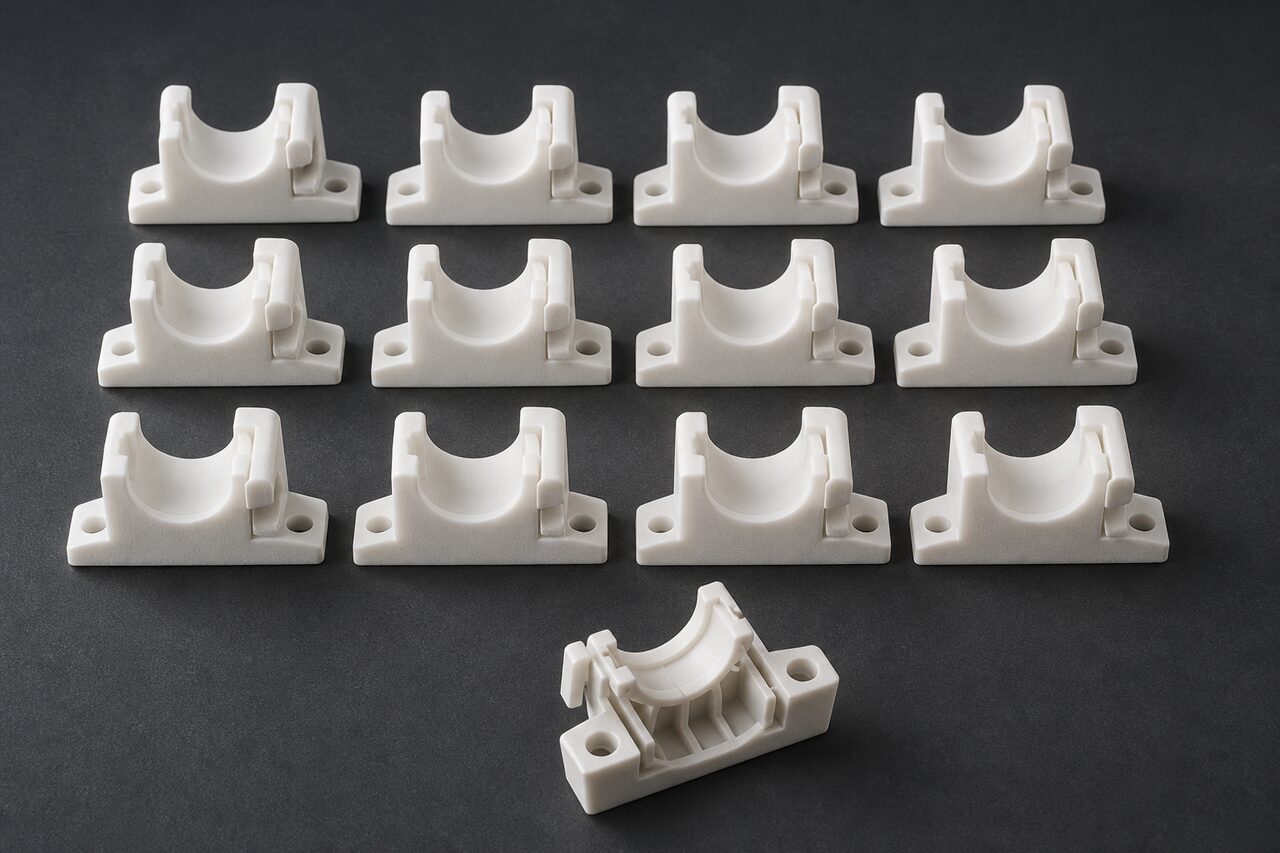
We produce functional nylon parts with Selective Laser Sintering, from prototypes to repeat production. The powder supports each part during the build, allowing complex geometry without separate support structures. Tell us what the part needs to do, and we will define the material, finish and production approach with you.
Not sure whether SLS is the right process? Tell us about the application, and we will work with you to determine the right approach.
CAPABILITY OVERVIEW
SLS capability at a glance
- Material
- PA12 nylon
- Production scope
- Functional prototypes through repeat production
- Build approach
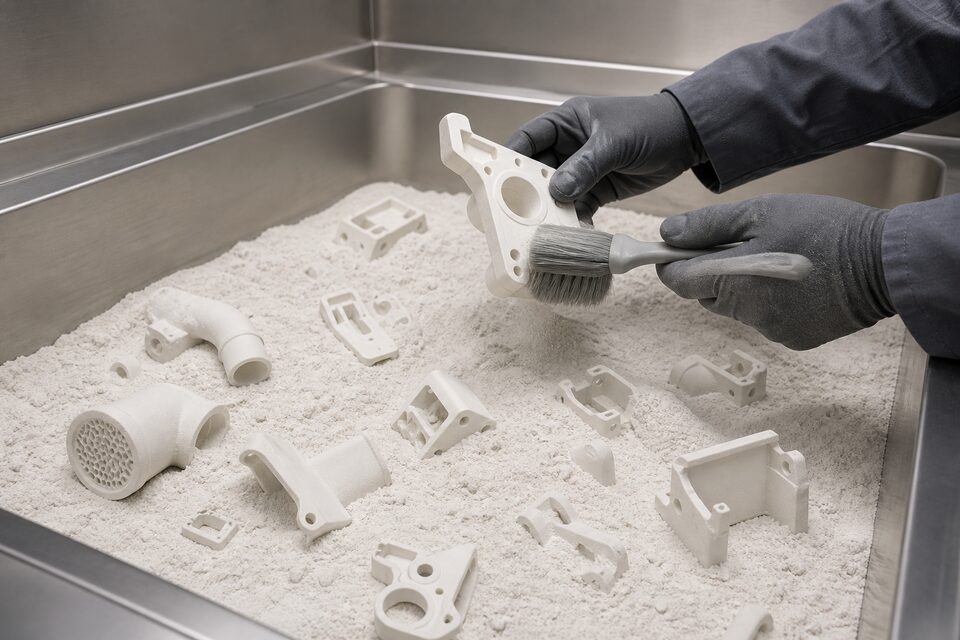
- Support-free laser-sintered powder bed
- Surface
- Natural fine-grain finish, with secondary finishing reviewed against the requirement
We take an SLS project from definition through production, verification and delivery. See how AtomAdd works
WHERE SLS FITS
Support-free geometry, planned across the build.
Unfused powder surrounds each part during production. This allows undercuts, interlocking features and multiple components to be arranged without attached supports, while powder removal, fit and finishing remain part of the engineering review.
MATERIAL & FINISH
PA12 is the established starting point.
PA12 nylon is our established SLS route for functional parts that need a balance of strength, stability and geometric freedom. Flexible powder options and other material requirements can also be reviewed against the application.
SLS parts leave the build with a natural, finely textured surface. Cleaning, smoothing, colour and other finishing requirements are confirmed against the selected material and geometry.
If the material or finish is not yet decided, begin with the environment, load, flexibility and appearance the part must meet.
START WITH WHAT YOU KNOW
What helps us evaluate an SLS part.
Begin with the geometry and what the part must do in service. The available information helps us review the SLS route; open process or material decisions can follow.
- CAD model, drawing or physical sample
- Application and service conditions
- Quantity or expected repeat-production range
- Critical fits, interfaces or moving features
- Enclosed areas and access for powder removal
- Surface, colour, inspection and delivery requirements
The process or material can remain “Not yet decided.” Share what is available, and we will work through the options with you.
START WITH THE PART
Bring us the requirement, not just the process name.
Bring us the function before the process choice. We will translate what the part must achieve into an SLS manufacturing approach and carry it through to finished parts.